 RepDB
ExerciseDB Alternatives 2026: 8 APIs and Datasets
ExerciseDB alternatives compared: RepDB, ExerciseDB.io and free-exercise-db files, plus hosted APIs from WorkoutX, AscendAPI, API Ninjas, MuscleWiki and wger.
For a branded fitness app with transparent exercise motion, matching stills and local data, choose RepDB Standard. It brings the visual library, JSON, ready-made SQLite and TypeScript types together with English, German, Spanish and French content. Standard costs $499 once; you can bundle the files in your app or host them yourself.
Try the animation sample on your own app background, then check your required exercises in the catalogue. Those two checks tell you more than a headline exercise count.
I built RepDB after looking for exercise data for a fitness tracker, and I sell it. This comparison explains where its package fits and when a larger catalogue, a hosted API or free photographic data makes more sense.

First, check which ExerciseDB you use
“ExerciseDB” now names several products. Find the one your app depends on before you pick a replacement:
- The RapidAPI listing. If your app calls
exercisedb.p.rapidapi.com, it uses ExerciseDB on RapidAPI, a hosted API billed through your RapidAPI subscription. - AscendAPI (exercisedb.dev). The site says it was previously ExerciseDB. Its free ExerciseDB V1 needs no key or sign-up: 1,500 exercises with one 180p GIF each. Paid V1 (2,000+ exercises, GIFs and images up to 1080p) and V2 (11,000+ exercises, HD images and video) are sold as RapidAPI subscriptions.
- ExerciseDB.io. Sells the data as downloadable JSON and GIF files on a one-time license. This is the ExerciseDB product in the comparison table below.
Check your existing host, schema and purchased terms before choosing an alternative.
File bundle or hosted API is the first decision. RepDB and ExerciseDB.io give you files to integrate and serve within your own product. WorkoutX, AscendAPI, API Ninjas, MuscleWiki and wger run hosted APIs, which suit remote search endpoints and media access without packaging a catalogue; they are compared below. RepDB suits local delivery and control over the visual layer; it requires integration rather than an API-key swap.
The comparison
| RepDB | ExerciseDB.io | WorkoutX | free-exercise-db | |
|---|---|---|---|---|
| Delivery | Download; bundle locally or self-host | Download; bundle or self-host | Hosted API | Downloadable files |
| Data | JSON; Standard adds SQLite + TypeScript types | JSON; Pro adds taxonomy and relationships | JSON over HTTP | JSON |
| Images | Classic + flat WebP; transparent classic on Standard | GIF; opaque backgrounds in inspected July samples | Hosted GIF; opaque background in inspected July sample | JPG gym photos |
| Animation | 544 exercises with motion clips (Standard); 157 static holds with stills | Animated GIF; Pro includes four resolutions | GIF access depends on plan | None |
| Catalogue | 701 exercises | 1,394 entries advertised* | 1,400+ advertised* | 800+ advertised |
| Languages | EN · DE · ES · FR in paid tiers | EN in inspected July sample | EN; DE, ES, FR and Chinese advertised | EN |
| Character | Male included; female add-on, +$99, covers the same full Standard catalogue | Generally male only, per its FAQ | No female collection specified in the reviewed offer | Real photos |
| Pricing | $499 Standard / $299 Stills, one-time | $199 Starter / $599 Pro, one-time | Free tier; $9.99–24.99/mo paid, monthly billing | Free |
| License | Commercial file license | Commercial use alongside exercise data; no raw-file redistribution | API terms, quotas and caching conditions | Published under Unlicense |
Prices and advertised formats checked October 4, 2026: ExerciseDB pricing, WorkoutX plans, free-exercise-db and RepDB pricing. Background and frame observations refer to the July samples below.
* Catalogue totals use each provider’s definition of an entry. The ExerciseDB list inspected in July includes camera-angle variants, (male)/(female) pairs and v. 2 entries. Compare the exercises your app needs; these totals are not deduplicated movement counts.
Hosted exercise APIs
If you would rather keep calling an endpoint than ship files, these are the hosted APIs most often compared with ExerciseDB, alongside WorkoutX above.
| AscendAPI | API Ninjas | MuscleWiki API | wger | |
|---|---|---|---|---|
| Access | Free V1 without a key; paid plans through RapidAPI | API key | API key on paid plans; the free plan is playground-only | Public exercise endpoints without a key |
| Catalogue | 1,500 (free V1), 2,000+ (V1), 11,000+ (V2) advertised | 3,000+ advertised | 1,900+ exercises, 7,700+ videos advertised | 932 exercise entries in the public API |
| Media | 180p GIF (free); GIFs and images up to 1080p (paid V1); HD images and video (V2) | Start and finish image URLs on premium plans only | Front and side videos, male and female; body maps from the Professional plan | 383 exercise images in the public API |
| Free tier | Keyless V1 | 3,000 calls/mo, 5 results per request, no commercial use | 500 calls/mo in the web playground | Free, open-source project |
| Paid | RapidAPI plans; prices not listed in its docs | From $39/mo (100,000 calls) on annual billing | $10–199.99/mo for 1,000–300,000 calls | — |
| Terms | No license terms stated in the reviewed docs | Commercial use on paid plans only | Paid plans include commercial use; no redistribution, own API or video caching | Creative Commons licenses per entry; code under AGPL-3.0 |
Checked October 19, 2026 on each provider’s own pages; catalogue sizes are the providers’ figures, except wger’s, which were read from its public API that day.
What the RepDB package buys you
In a branded exercise screen, the animation, still image, language and metadata need to work together. Standard gives you that package:
- A visual library for your UI. Transparent classic motion clips and stills sit on light, dark or branded backgrounds. Start/peak images and muscle heatmaps let a card and its detail screen use the same character and visual style.
- Data ready for your stack. Use JSON in a web build, query the supplied SQLite on mobile, or work with the included TypeScript definitions. The bundle includes exercise instructions, muscles, equipment, goals, safety tags and relations for filtering and planning.
- Four content languages. EN/DE/ES/FR text ships with the paid data, so language support does not require sourcing another exercise catalogue.
- A file purchase you control. Pay $499 once for Standard and decide how to bundle or host its data and assets within your licensed app. App traffic does not consume a RepDB API quota.
Stills costs $299 for JSON and classic/flat still images, the classic ones with transparent backgrounds; motion clips, ready-made SQLite and TypeScript types are Standard features.
Male and female versions of every exercise
Character choice can be a display preference in your app. Standard includes the male character, and the female character add-on costs +$99. Both cover the same 701 exercises, including 544 with motion clips and 157 static holds with stills for each character. Each uses a consistent classic style, with matching stills and a muscle heatmap.
The female assets use the same exercise IDs and relative file paths. Switch the asset folder to change the character while keeping the exercise list, saved workouts and training history. Your users can keep every selected exercise when they switch. See the male and female versions side by side.
The images decide it
The Turkish get-up samples inspected in July 2026, side by side. This is a comparison of those files; use the current RepDB motion preview to inspect today’s sample bundle.
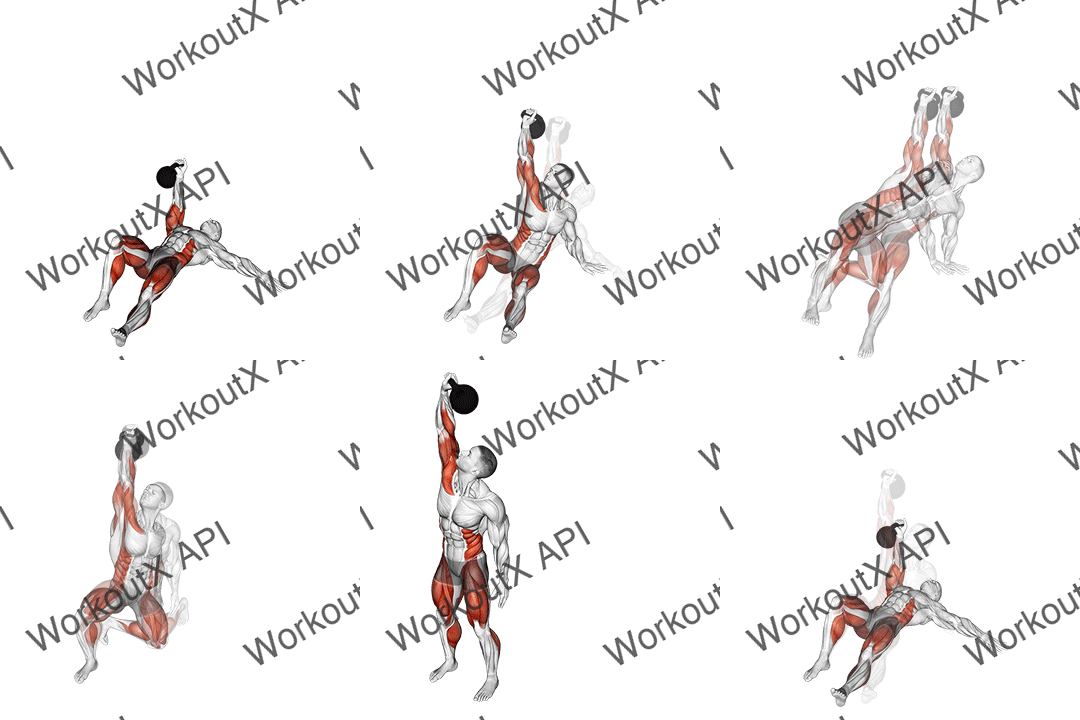
The July samples show why the format matters for a branded UI:
- Transparency. The inspected GIF backgrounds appear as white squares on a dark screen. RepDB Standard’s transparent classic WebP works on your chosen background and can be tinted with a CSS filter:
- Colour. The inspected GIFs use palette colour; RepDB’s full-colour WebP preserves the shading in this example. Actual appearance depends on the source artwork and encoding.
RepDB’s current catalogue contains 701 exercises: 544 with motion clips and 157 static holds. Standard supplies the motion clips as transparent looping WebP in the classic style. The static holds ship as still images, without animation. Stills includes classic and flat stills; it does not include motion clips.
Download the animation sample and put it in one of your exercise screens. You can also browse the current motion preview. The premium preview is for evaluation; production use requires the appropriate paid license.
Switching from ExerciseDB: check one workout first
Start with a workout your app already supports. This checks the catalogue, data and playback together before a wider migration.
- Match the exercises by name and variant. Search the public RepDB catalogue and download its slug-and-name list to record matches. Check equipment, grip and body position rather than assuming a similar name is the same exercise. Keep a list of missing variants.
- Test the schema and visual format. Download the premium sample, map its names, instructions, muscle and equipment fields to your app, and render one transparent WebP on your real background. Confirm playback on your target devices. RepDB supplies animated WebP rather than a hosted
gifUrlendpoint. - Preserve existing workout references. Keep a small table from your old exercise IDs to reviewed RepDB slugs. Use it when migrating saved workouts, favourites and history; leave unresolved entries for review. RepDB is a different catalogue and schema, so the migration is not a drop-in endpoint change.
- Use the example for your stack. The existing Next.js, React Native and Flutter projects demonstrate local JSON, search, filtering and image delivery. They use the free dataset and include a paid animation sample for evaluation; Standard supplies the production motion library and SQLite when you need them.
If your required exercises are covered and the sample fits your screen, compare the RepDB plans to select Standard or Standard with the female character. You have already checked the integration that matters to your app.
Which one, when
RepDB Standard — choose it for a branded fitness app where transparent motion, matching stills, local JSON/SQLite and EN/DE/ES/FR content belong in one package. The catalogue contains 701 exercises: 544 with motion and 157 static holds. The sample and migration steps above let you check the fit before buying.
ExerciseDB.io — you want a larger raw catalogue as self-hosted files and GIF artwork fits your UI. Starter costs $199 with 180px and 360px GIFs; Pro costs $599 and adds 720px/1080px GIFs, taxonomy and exercise relationships. Its terms cover visuals used alongside the exercise data.
WorkoutX — you prefer a hosted exercise API with remote filtering and GIF delivery. Its free plan lists 500 requests per month; paid plans run from $9.99 to $24.99 per month on monthly billing. Check the GIF coverage and quotas for your chosen plan, plus its caching and asset-use terms.
AscendAPI — you want to stay closest to the ExerciseDB data: the keyless free V1 for a prototype, or V2’s larger catalogue with images and video through RapidAPI. Check the plan’s caching and media terms on RapidAPI before you ship.
API Ninjas — you mainly need text metadata from a general-purpose API vendor. Images are premium-only, and the free tier does not allow commercial use.
MuscleWiki API — you want real video demonstrations and up to 14 languages. Video may not be cached on your side, so every playback request counts against the monthly quota.
wger — you want open data you can query without a key or mirror. Each entry carries its own Creative Commons license, so check attribution and share-alike terms for the entries you use.
free-exercise-db — your budget is zero, static gym photography fits your UI, and you can adapt English JSON data yourself. The project advertises 800+ exercises and publishes under Unlicense. It does not supply an animation library.
For a free starting point with illustrations, the RepDB GitHub dataset supplies flat 512px WebP images, EN/DE/ES text and commercial in-app use with attribution. The free release can lag behind the paid catalogue. Standard adds the transparent motion library, classic style, French and pro data formats; the premium animation sample is evaluation-only.
Methodology & disclosure
Current product check — October 4, 2026. Pricing and advertised formats were rechecked on ExerciseDB pricing, its FAQ, WorkoutX plans and free-exercise-db. License summaries refer to ExerciseDB terms, WorkoutX terms and the linked repositories. Advertised coverage is not an audit of every file.
Hosted API check — October 19, 2026. Access, media, quotas and terms were read from the AscendAPI introduction and ExerciseDB V1 docs, API Ninjas Exercises and pricing, the MuscleWiki API pricing and FAQ, and the wger API docs and repository. The wger exercise and image counts come from its public API on the same day. No files from these services were inspected.
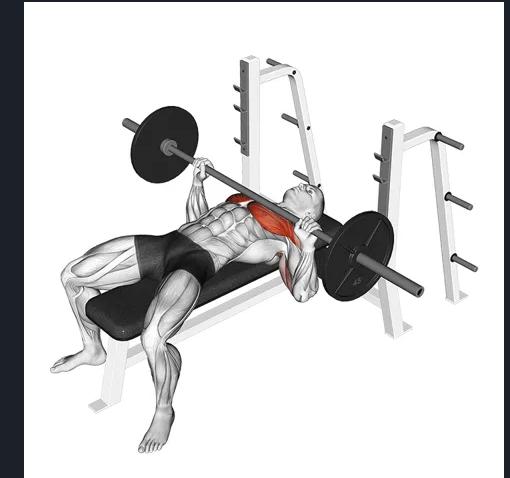
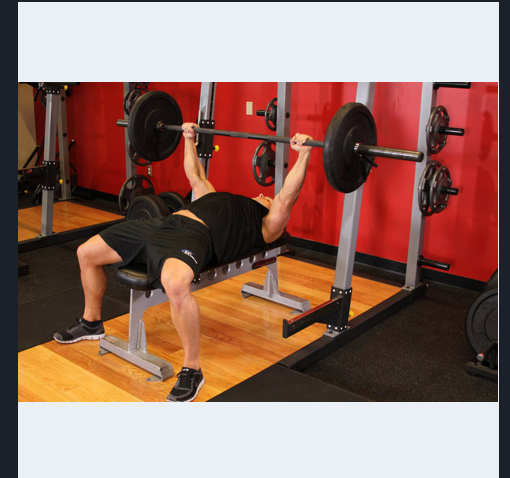
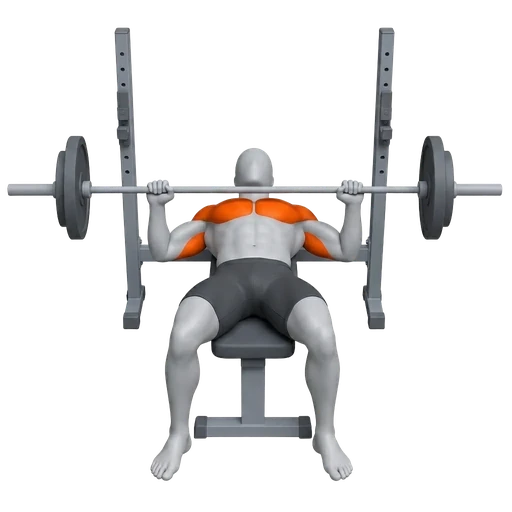
Historical file inspection — July 2026. ExerciseDB.io’s public sample bundle included exerciseList.json, 0025.json and GIFs at 180/360/720/1080 px. I downloaded both services’ 0551 GIF (kettlebell Turkish get-up “(squat style)”) and compared it frame by frame: the same 54-frame animation, with WorkoutX’s upscaled to 360px and watermarked. The bench-press GIF inspected then blended between poses. These observations describe those samples; the product-page check does not constitute a fresh file inspection or establish how much of either catalogue uses that technique.
Current RepDB coverage. Total exercises, motion coverage and static holds are read from the shipping bundle at build time. Motion coverage counts exercise records with motion clips, not necessarily unique files: close variants can share a clip. The July Turkish get-up measurements above are retained as a dated example.
Disclosure: I build and sell RepDB. Read accordingly, and check every claim above against the sources.